




Supply Chain Security: Managing & Mitigating Third-Party Risks
Course
Don Gibson, Natasha Lalovic, Geeta Sriskanthan and Gavin Whatrup examine why supply chain security is now a resilience challenge, how hidden third-party dependencies amplify risk and why moving beyond checkbox compliance is essential.
As organizations become increasingly dependent on complex digital ecosystems, supply chain security has emerged as a critical driver of operational resilience. Cyber and physical risks now intersect across third-party relationships, creating hidden dependencies, shared points of failure and amplified impact when incidents occur. Managing these risks requires visibility beyond direct suppliers and a shift from trust-based assumptions to evidence-led assurance.
Effective third-party risk management depends on layered security, pragmatic governance and continuous validation. Moving beyond checkbox compliance toward contextual assessments, rapid incident response and ecosystemwide accountability enable organizations to understand concentration risk, meet regulatory demands such as DORA, and strengthen resilience across interconnected supply chains.
In this insightful session, industry leaders will discuss:
- Why visibility across third- and fourth-party ecosystems is essential to identifying critical points of failure;
- How contextual validation, testing and continuous review improve trust in suppliers;
- How regulatory pressure, layered security and incident readiness are reshaping supply chain risk management.
Here is the course outline:
Supply Chain Security: Managing and Mitigating Third-Party Risks |
Completion
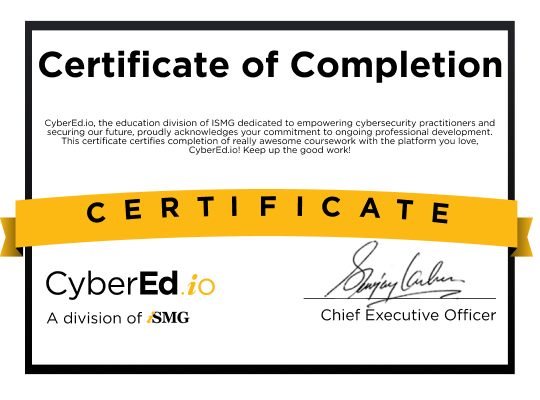
The following certificates are awarded when the course is completed:
 |
CPE Credit Certificate |
