




Akshay Sharma of Drata explains how AI is transforming GRC from a periodic audit exercise into a continuous, automated trust program, and what an AI-native compliance stack actually looks like.
Traditional GRC operates like a fire drill - point-in-time snapshots assembled quarterly to get through an audit, while the actual security posture drifts between reviews. As software development accelerates, artificial intelligence-driven attacks increase in frequency and complexity, and regulatory requirements multiply, the gap between compliance activity and real security readiness grows wider. The future of GRC is not more tools - it is using existing systems more effectively, with AI handling evidence collection, drift detection and remediation at machine speed.
This session, led by Akshay Sharma of Drata, will cover:
- How real-time signal monitoring replaces periodic compliance snapshots in an AI-native GRC stack;
- How agentic workflows automate security reviews, questionnaires and evidence collection without human intervention;
- Why continuous trust - exchanged across organizations on a common language - is where GRC is headed next.
Here is the course outline:
From Manual Compliance to Autonomous Trust: How AI Is Shifting the Future of GRC |
Completion
The following certificates are awarded when the course is completed:
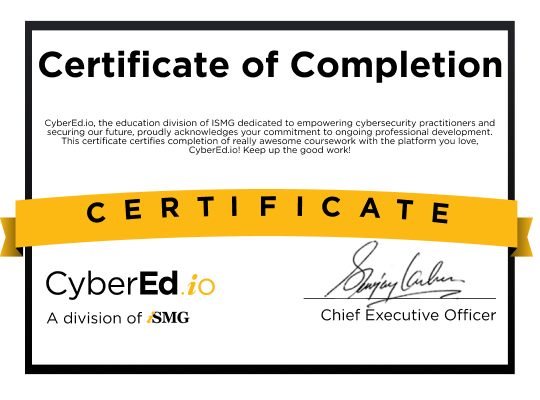 |
CPE Credit Certificate |